

UKIYO · Journal
Menopause Hair Loss and Perimenopause Hair Changes: A Stylist's Guide
By Codie Hair, Owner, UKIYO Wānaka
Shop this article
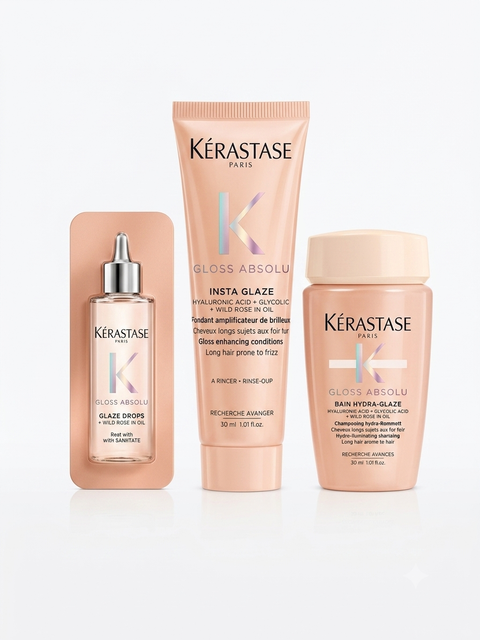
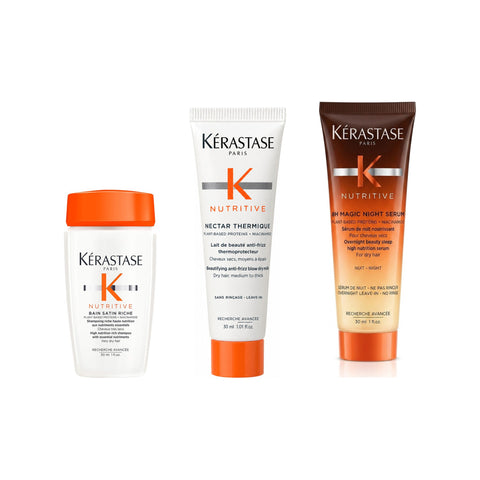
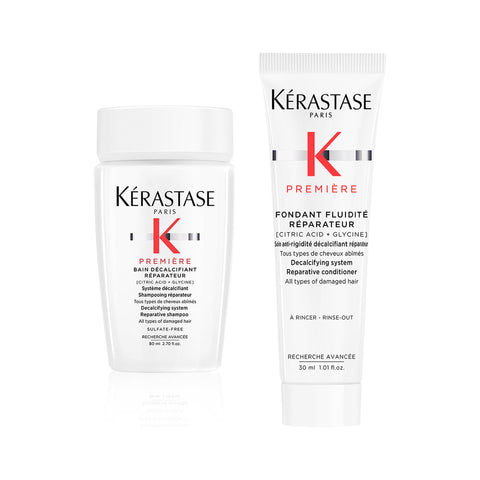
The exact products our stylists recommend in this piece — genuine salon stock, shipped NZ-wide from Wānaka. Orders over $59 get a free Kérastase travel-size gift at checkout.


Sebastian Professional
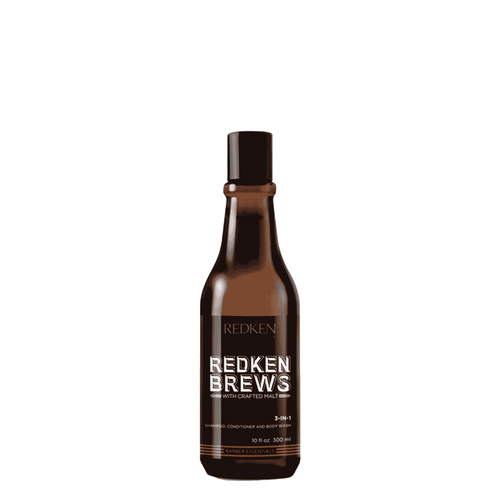
Sebastian Professional NO.BREAKER Bonding & Styling Leave-In Cream$71.00
$56.80
Free NZ shipping over $75.
Short answer: Falling oestrogen through perimenopause and menopause commonly makes hair finer, less dense at the part and crown, drier and more wiry, and slower to grow. A cut built for density, softer colour upkeep and gentle, moisture-first care make a real difference. Products can't override hormones, so if you're losing a lot of hair, or it's patchy, see your GP first.
Updated November 2026. Prices are our live online prices.
Somewhere in your 40s or 50s your hair can quietly become a different head of hair. Thinner on top, drier, coarser where the grey comes through, slower to grow and harder to style. It isn't something you're doing wrong. It's one of the most common things women bring to the chair in Wānaka, and one of the least talked about, so here's what we see and what actually helps.
What are the common perimenopause hair changes?
Most women notice some mix of these, gradually or what feels like overnight:
- Less density at the part, the crown and around the hairline.
- Finer strands. Each hair is a little thinner, so the same number of hairs looks like less.
- A texture change. Drier, rougher, frizzier or more wiry, especially where grey is coming in.
- Slower growth, so length takes longer to build and breakage shows more.
- A scalp that behaves differently. Some get oilier, some get drier or itchier.
Perimenopause can start several years before your periods stop, so these changes often turn up in your early to mid 40s, before you'd connect them with menopause at all.
Is menopause hair loss normal, and when should I see a doctor?
Some thinning through this stage is very common. Hormones are only one cause, though. Iron, thyroid, stress, illness, medication and genetics all affect hair too, and several of them line up with the same years. That's why we always say the same thing: if you're shedding noticeably more, the thinning is patchy, or your scalp is sore or inflamed, book in with your GP or a dermatologist. A blood test is quick, and there are medical options a salon can't offer. Plenty of our clients have had that conversation. Nobody should feel awkward about it.
What we can do is make the hair you have look fuller, feel better and break less. Our guide to why hair falls out goes through the other causes in more detail.
Thinning hair in menopause: the cut makes the biggest difference
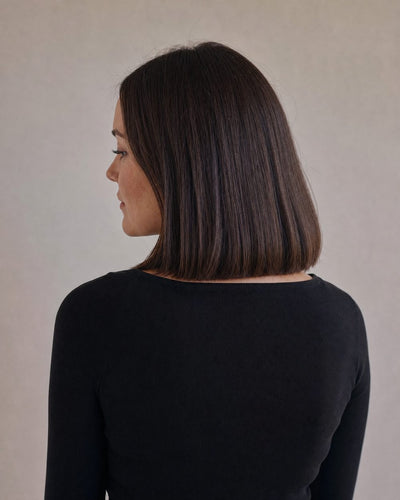
Before any product, the cut. Long, fine lengths that taper to wispy ends make thinning more obvious. A shape with a solid baseline, soft internal layers and often a bit less length reads as much thicker straight away. A slightly moved parting helps too, because the part you've worn for 20 years is usually the thinnest spot on your head.
Hair that's growing more slowly also loses more to breakage, so regular trims protect what you've got. Our guide to how often to cut your hair gives the timings we use. If you want a stylist to look at it properly, a cut and style at UKIYO starts with a proper chat about what's changed.
Colour: working with grey instead of fighting it
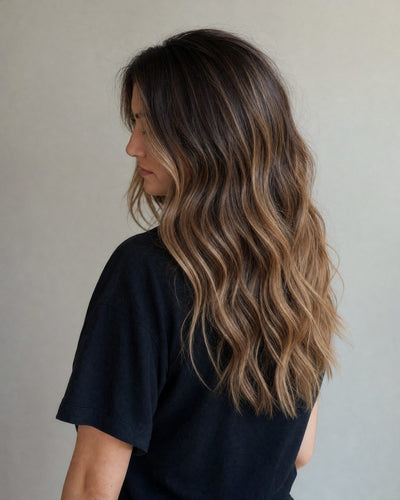
Root touch-ups every four weeks are tiring, and strong all-over colour on fragile hair adds to the dryness. Many clients at this stage move to grey blending, which softens the regrowth line so you can go longer between visits. Fine highlights around the face also break up the scalp showing through at the part, which makes the hair look denser.
Menopause dry hair: how to put moisture back
Drier, wiry hair needs more moisture and less heat, not more product piled on the roots.
- Wash with a gentle, hydrating shampoo. Two or three times a week is usually enough.
- Condition every wash, and use a mask once a week on the lengths.
- Use a heat protectant every time you blow-dry or straighten.
- Finish with a little oil or serum on the ends to calm the wiry texture.
For more on dryness generally, see our best shampoo for dry hair guide.
Which products help menopausal hair? Two ways, choose by budget
We stock two brands that cover every stage of this, at two price points. Sebastian is the lower one, Kérastase the premium option. Both do the job. Kérastase is more targeted and has more steps if you want them.
| What's changed | Sebastian | Kérastase |
|---|---|---|
| Fine, flat, less body | Volupt Max Shampoo $50.12 | Densifique Bain Densité $57.12 |
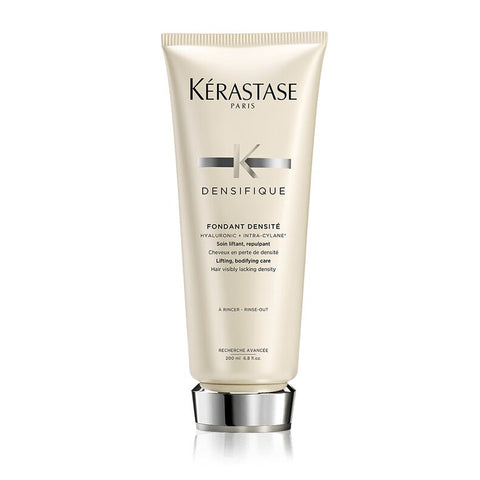
| Lightweight conditioner | Volupt Max Conditioner $50.12 | Densifique Fondant Densité $70.56 |
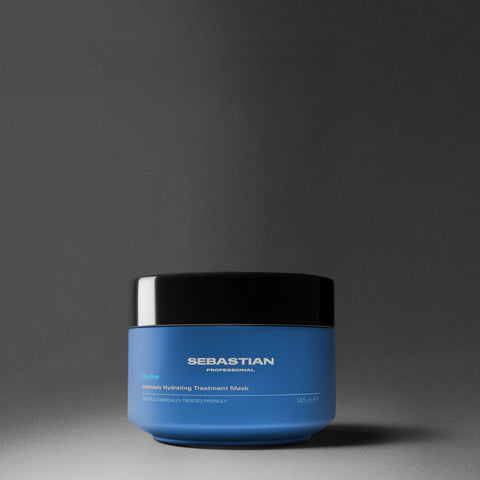
| Dry, wiry, coarse | Hydre Treatment Mask $51.88 | Chronologiste Masque Intense $107.52 |
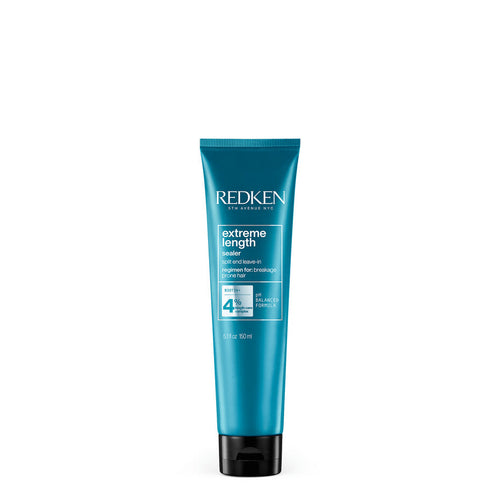
| Snapping and breaking | NO.BREAKER Leave-In Cream $63.32 | Genesis Fondant Renforçateur $70.56 |
Want the whole routine? The Sebastian Volupt Routine Bundle puts the shampoo, conditioner, spray gel and Thickify mousse in one set, for less than buying them separately. Or browse the full Sebastian Volupt range.
A few extra notes from the chair:
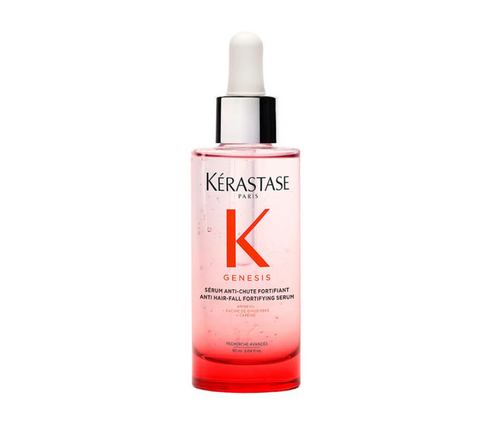
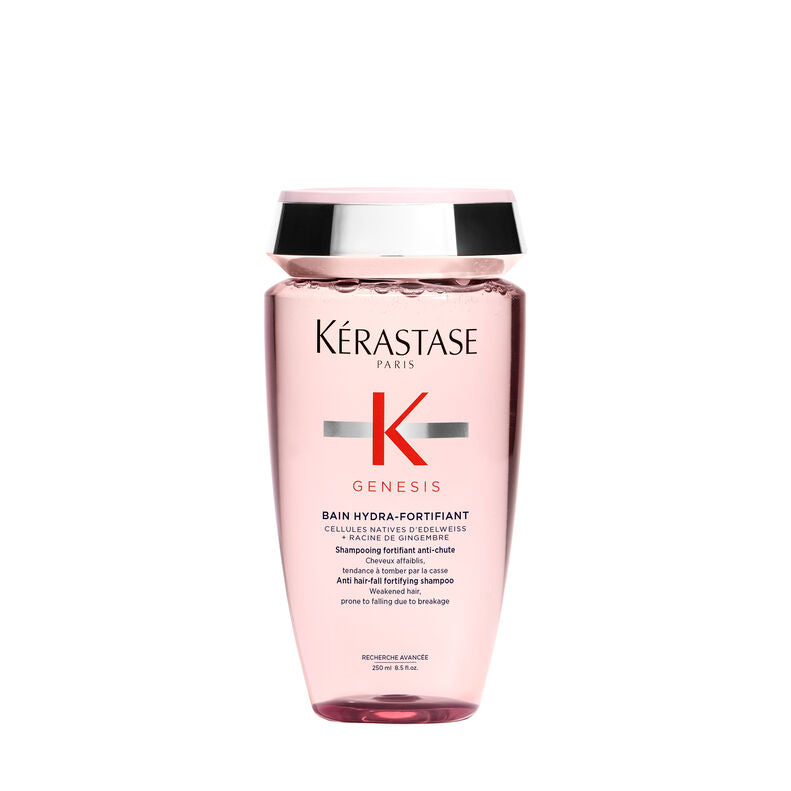
- Hair fall from breakage: Kérastase Genesis is built for weakened hair that's shedding because it breaks. The Sérum Anti-Chute Fortifiant ($94.08) goes on the scalp daily. It's a cosmetic, not a medicine, so it supports the hair you have rather than regrowing hair.
- Dry and fragile all at once: Genesis Bain Nutri-Fortifiant ($57.12) is the richer Genesis wash.
- The full treat: Chronologiste is Kérastase's regenerating range, and Bain Régénérant ($66.36) is a lovely wash for mature, tired hair.
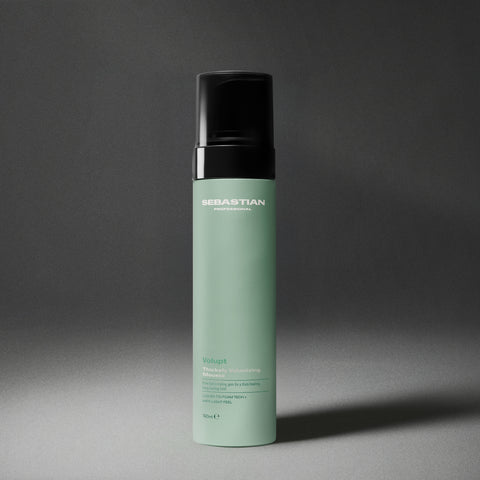
- Body at the root: Sebastian Volupt Thickify Mousse ($49.24) on damp roots before drying.
For the whole thinning picture, including Densifique vs Genesis, see thinning hair and hair fall and our Kérastase Densifique guide.
Itchy or oily scalp in menopause
Hormonal shifts can change how your scalp behaves. If it's suddenly oily at the roots but your ends are dry, Kérastase Spécifique Bain Divalent ($57.12) balances the roots without stripping the lengths. A persistent itch, redness or flaking that doesn't settle with a gentler routine is worth showing to your GP.
Can you get thicker hair after menopause?
Not by product alone. What you can get is hair that looks and feels thicker: a cut built around density, colour that adds dimension, less breakage, and volume products at the root. For many women that's the difference between hair they're fighting every morning and hair they like again. If thinning is ongoing, your GP can talk you through the medical side, and you can do both at once.
Want a plan for this stage of your hair? Book at UKIYO in Wānaka, or call 03 443 1040. We have this conversation every week.
Questions we get asked
Does menopause cause hair loss?
It commonly causes thinning, especially at the part and crown, as oestrogen falls. Iron, thyroid, stress and genetics can play a part too, so significant or patchy loss is worth checking with your GP.
When do perimenopause hair changes start?
Often in your early to mid 40s, sometimes years before periods stop. Finer strands, less density and a drier, more wiry texture are the most common changes.
What is the best shampoo for thinning hair in menopause?
For fine, flat hair, Kérastase Densifique Bain Densité or Sebastian Volupt Max. For hair that's breaking and shedding, Kérastase Genesis. Neither is a medical treatment.
Why is my hair so dry and frizzy since menopause?
Lower oestrogen changes how much oil the scalp produces, and incoming grey is coarser. A hydrating shampoo, a weekly mask, heat protection and a little oil on the ends all help.
Will my hair grow back after menopause?
Some shedding settles once hormones stabilise, but not always. A GP or dermatologist can tell you what's going on and what medical options exist.
What haircut makes thinning hair look thicker?
A shape with a solid baseline, soft internal layers and often a little less length. Moving your parting also helps, because the old part is usually the thinnest spot.
Should I stop colouring my hair in menopause?
You don't need to, but many women move to grey blending or softer highlights. It's gentler on fragile hair and means fewer root appointments.
Does Kérastase have a range for menopausal hair?
Densifique is for hair that's lost density, Genesis for weakened hair that's breaking and shedding, and Chronologiste for dry, mature hair. Many clients combine them.
Everything we sell is genuine salon stock, bought direct from the brands' New Zealand distributors and shipped from our salon on Helwick Street in Wānaka. Free NZ shipping over $75.
Share
UKIYO
Shop this article
The exact products our stylists recommend in this piece — add to cart and we'll ship NZ-wide.
Sebastian Professional
Sebastian Professional NO.BREAKER Bonding & Styling Leave-In Cream$71.00
$56.80
11% off your first order with code WELCOME11. Free NZ shipping over $75.
Read more
Postpartum Hair Loss NZ: Timeline, Treatment and What Helps
Short answer: Postpartum hair loss is common and usually temporary. It tends to start two to four months after birth, is often heaviest around four months, and settles for most people within six to...
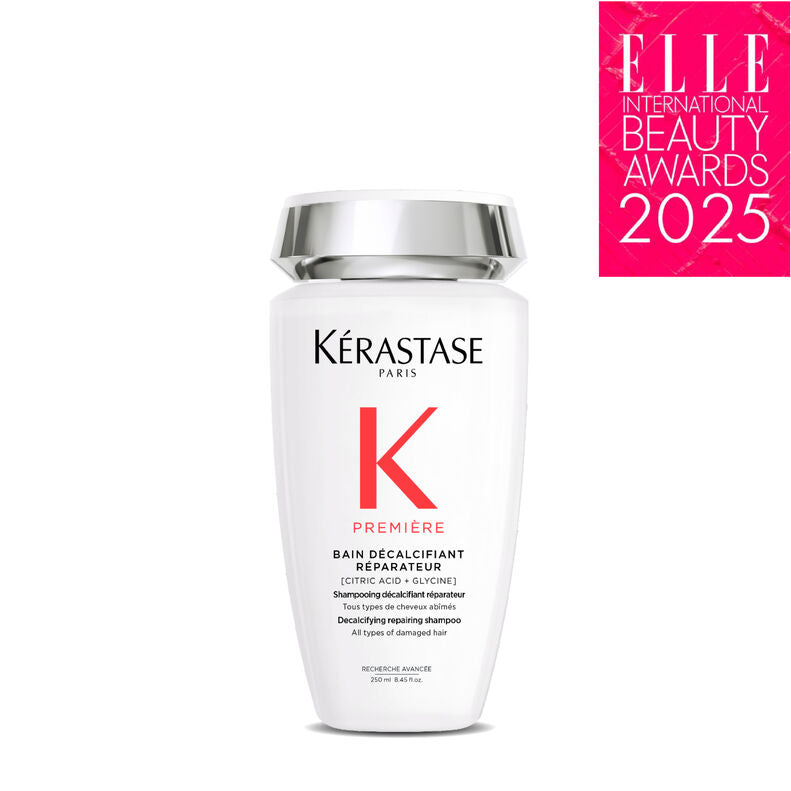
Hard Water Hair: What It Does and the Shampoo That Fixes It (NZ)
Short answer: Hard water leaves calcium and magnesium on your hair. Over time that film makes colour dull and fade faster, blondes look dingy, and hair feels dry and rough however much you conditio...